Voice AI Is Finally a No-Code Product Wedge—But Start With One Call
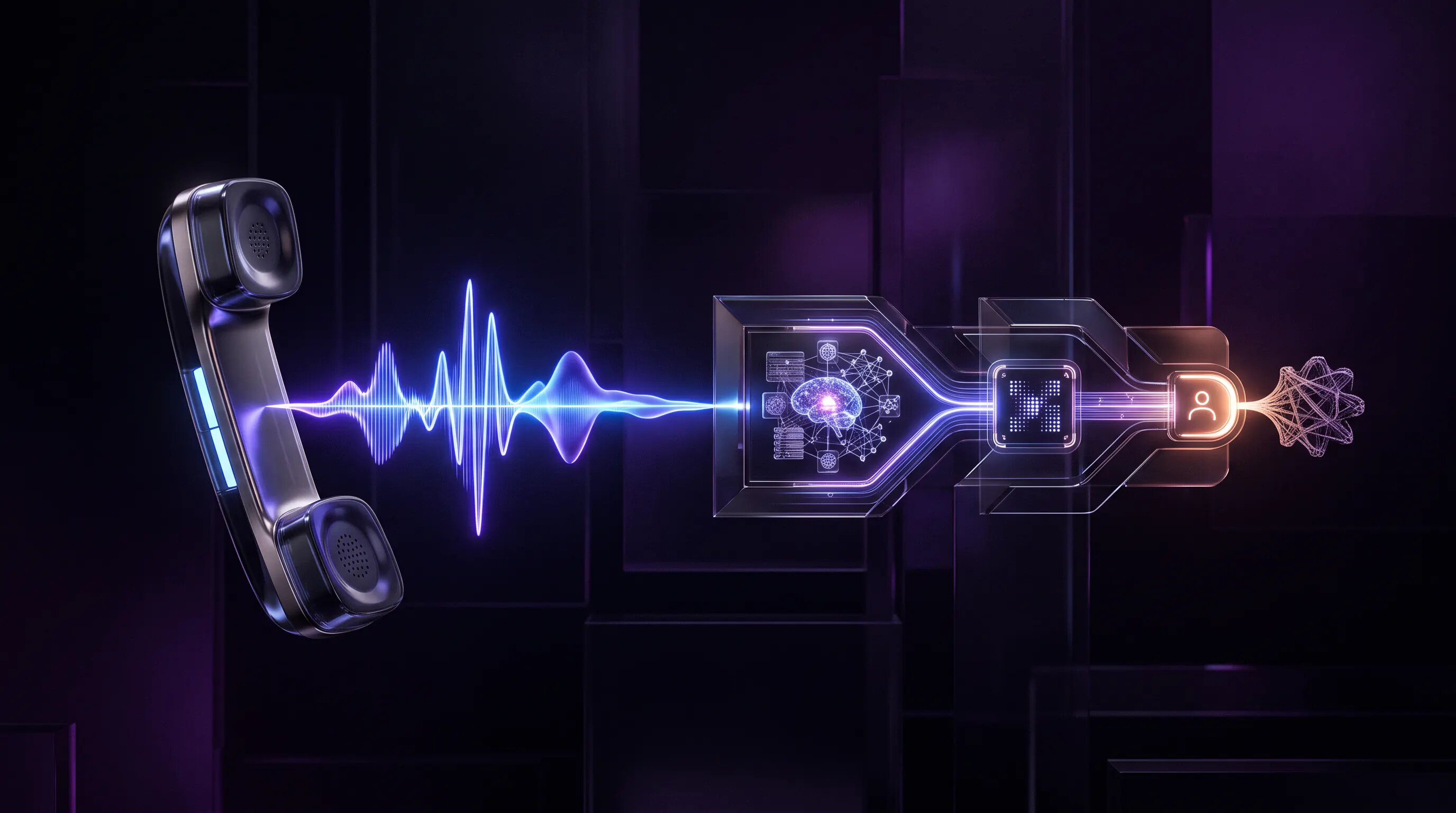
Voice AI just crossed an important line.
The interesting part is not that the voices sound more natural. It is that a domain expert can now prototype a working phone workflow without first assembling a speech-to-text model, a language model, a text-to-speech system, telephony, tools, and monitoring.
On July 1, xAI introduced a beta Voice Agent Builder that packages those pieces into a no-code interface. A week later, OpenAI introduced GPT-Live, a full-duplex voice model designed to listen and speak continuously while delegating harder work to another model in the background.
The technology is becoming easier to access. That does not mean you should build a generic “AI receptionist.”
The better opportunity is one call, for one customer, with one valuable outcome.
Voice is an interface, not the product
A voice agent can answer questions. That is useful, but easy to copy.
A product begins when the call connects to a workflow the customer already cares about. It knows the relevant policies. It gathers the right facts. It uses a tool. It recognizes an exception. It hands the case to a person when judgment is required.
xAI’s builder shows how much of the surrounding infrastructure is becoming configurable. Its announcement describes built-in telephony, knowledge retrieval, tools, guardrails, MCP connections, observability, call recording, transcripts, and human transfers. A founder can describe a call flow in plain language, attach business documents, connect actions, and test the experience in a browser.
That lowers the cost of the first experiment. It does not create the workflow knowledge.
If you have spent years in property management, logistics, insurance, education, healthcare operations, home services, or another call-heavy field, you know things a general builder does not:
- which questions reveal the real problem;
- which details must be confirmed twice;
- which requests are routine;
- which exceptions create risk;
- when a human needs to take over;
- what must happen after the call ends.
That sequence is your starting asset.
Pick the call people already repeat
Do not begin with “What voice AI company should I build?”
Begin with: “Which call does someone on my team handle again and again?”
Look for a workflow with four qualities:
- It happens frequently. Repetition creates enough examples to test and improve the product.
- It follows a recognizable path. The conversation can vary, but the required information and next steps are reasonably stable.
- It ends with a concrete outcome. A booking is created, a request is classified, a record is updated, or a qualified case is routed.
- Mistakes can be contained. The first version can pause, confirm, or transfer before a high-consequence action.
A commercial HVAC expert, for example, should not start with an agent that “handles every customer call.” Start with an after-hours intake agent for one service category. It can capture the equipment type, symptoms, site location, urgency, and callback details. It can check the service area and route the case to the right on-call person.
That is narrow enough to test. It is also tied to an operational outcome.
The same pattern works elsewhere:
- a property-management agent that gathers maintenance details and creates a complete work-order draft;
- an enrollment agent that answers program questions and books qualified applicants;
- a logistics agent that collects shipment exceptions and routes them by cause;
- an insurance agent that checks which documents are missing before a submission review.
The wedge is not “talk to AI.” The wedge is “finish this call correctly.”
Design the handoff before the happy path
Natural conversation can make a weak workflow feel more capable than it is.
OpenAI says GPT-Live uses a full-duplex architecture, so it can listen and speak at the same time, handle interruptions, pause, and decide when to invoke a tool. That is meaningful progress. Real callers interrupt, change direction, think out loud, and speak over background noise.
But the most important design question is still simple: what happens when the agent is uncertain?
Before you write a long prompt, define three boundaries:
- Allowed: actions the agent may complete automatically.
- Confirm first: actions that require the caller to verify critical details.
- Transfer: situations that require human judgment or fall outside the approved scope.
Then make the transfer useful. The human should receive a short summary, the information already collected, the unresolved question, and the call transcript or recording when appropriate. A caller should not have to repeat the entire conversation.
This is where domain expertise becomes product design. You know which exception is harmless and which one can create a financial, legal, safety, or trust problem.
Autonomy is not the goal. A reliable outcome is.
Build the first version around evidence
A two-minute setup claim is useful for getting to a demo. It is not a substitute for testing.
Build your first version with real, anonymized call scenarios from the workflow. Include normal calls, incomplete information, strong accents, interruptions, background noise, off-topic requests, and cases that should trigger a transfer.
Track a small set of product metrics:
- Did the agent capture every required field?
- Did it use the correct source or tool?
- Did it confirm sensitive or ambiguous details?
- Did it transfer at the right moment?
- Did the promised follow-up actually happen?
- Could a human understand what the agent did?
Review transcripts. Listen to failures. Turn every surprising mistake into a new test case.
The model and voice provider may change. Your call map, exception library, handoff rules, and evaluation set become the durable product assets.
Your advantage is the workflow behind the voice
The recent releases are a signal. Voice interaction is becoming more natural, and the infrastructure required to prototype a production-style agent is moving into configurable tools.
That creates an opening for nontechnical founders. Not because the technology will build the business for you, but because you can spend less time assembling the voice stack and more time encoding a workflow you understand.
Pick one repeated call. Define the finished outcome. Mark the boundaries. Test the ugly cases. Then put the product in front of the people who already live with that workflow.
If you want help turning your domain expertise into a focused AI product and a 12-week launch plan, book a strategy call. That is what we build inside the AI Product Accelerator.
Sources: xAI, “Introducing the Voice Agent Builder” (July 1, 2026); xAI, “21 New Flagship Grok Voices” (July 6, 2026); OpenAI, “Introducing GPT-Live” (July 8, 2026).