Prompt caching saves input work, not finished answers
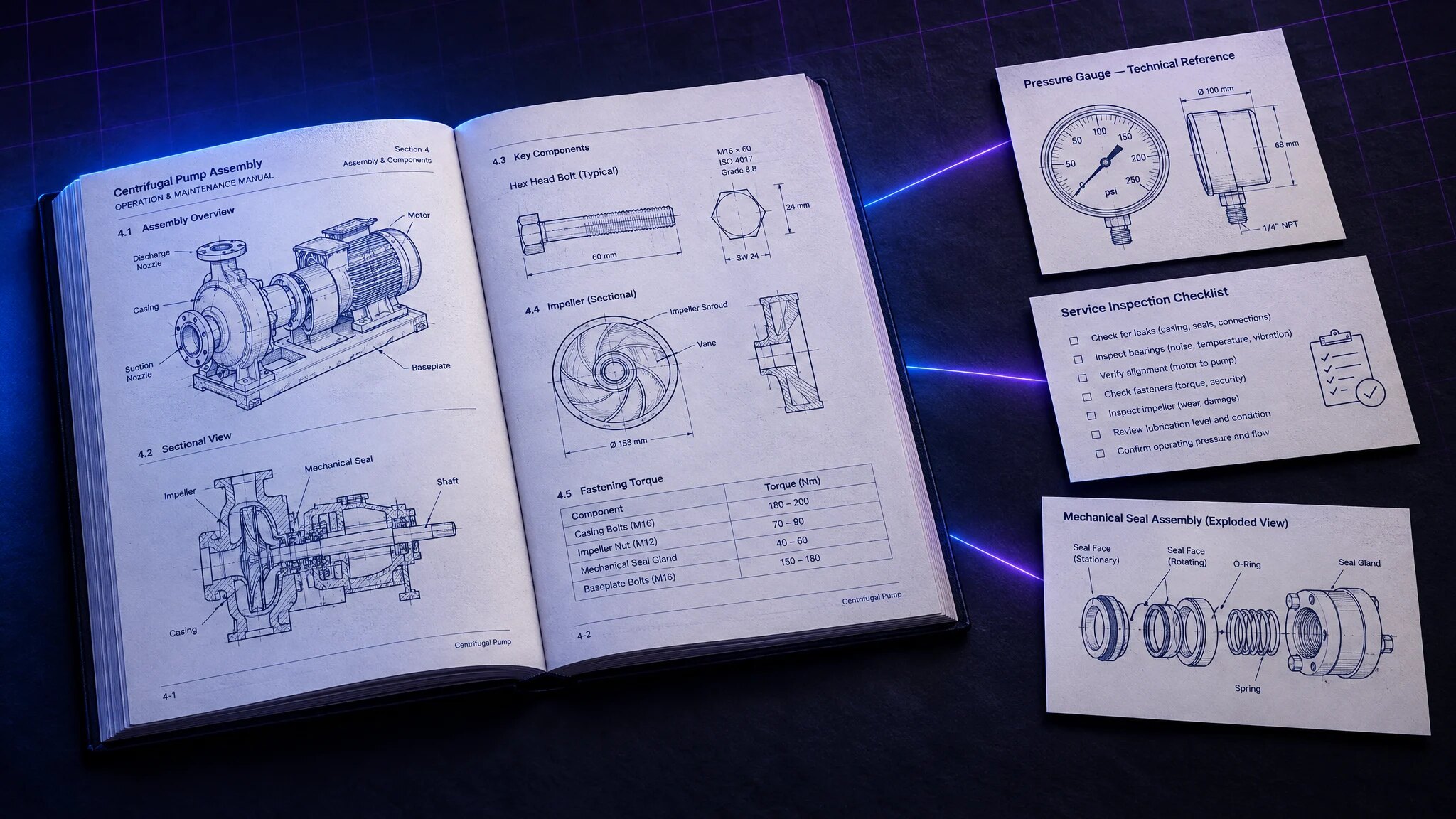
Your AI product may read the same manual ten times before lunch. That does not mean it should give the same answer ten times.
Imagine a maintenance assistant using an approved equipment manual. One technician asks about pressure limits. Another asks for an inspection checklist. A third wants to identify a replacement seal. The reference material stays the same. The work changes.
Prompt caching can make the repeated input processing cheaper while the model still generates each response. That distinction matters when you turn a useful prototype into a paid service.
On September 29, 2026, Karini AI announced prompt caching for its platform, including separate metering for ordinary input, cache reads, and cache writes. This is a vendor announcement, not evidence of savings for your product. It is a timely reason to inspect what your workflow repeatedly sends to a model.
Understand which work you are reusing
Prompt caching reuses the model’s processed state for an unchanged beginning of a prompt. That beginning is called a prefix.
OpenAI’s documentation explains that a later request can reuse a matching prefix while still processing new input and generating a new response. Anthropic documents the same basic pattern, with controls for choosing cache boundaries.
This is different from saving a finished answer and returning it later. Answer caching might reuse yesterday’s response. Prompt caching reuses part of the input work, not the completed response.
For the hypothetical maintenance assistant, the stable material might be the approved manual, instructions, and output format. The changing material is the technician’s question and current observations.
None of this proves that the answer is correct. The product still needs the right source, a useful task definition, and review rules appropriate to the work. A cache hit is an efficiency signal, not a quality score.
Put stable context before changing details
A reusable prefix must match. OpenAI says changes to content or relevant settings before a cache boundary can prevent the following prefix from matching. Anthropic also requires the cached prefix to remain identical.
That creates a practical design rule. Put useful, stable material first and changing details later.
For the maintenance example, separate:
- Approved instructions and the expected response structure.
- The authorized equipment manual and its version.
- The current question, readings, and observations.
Ask your builder how it assembles those parts. If it inserts a fresh timestamp at the beginning of every request, or rewrites earlier instructions each time, it may interrupt reuse.
Do not freeze information merely to preserve a cache hit. If the approved manual changes, send the correct version even when that means processing it again. Keep current authorization checks in place. Cheaper input is never a reason to include a document the user should not access.
Your professional experience helps identify what genuinely stays stable. The equipment reference might stay fixed during a session. The machine’s condition does not.
Calculate savings on the whole job
Reduced cached-input prices do not translate directly into the same reduction in your product’s total costs.
The model still generates output. Your workflow may also pay for retrieval, storage, tool calls, retries, and human review. Some providers and models charge more to write a cache entry than to process ordinary input.
Anthropic’s documentation lists different prices for ordinary input, cache writes, cache reads, and output. It also documents cache lifetimes. OpenAI’s caching behavior and pricing vary by model. Check your actual model and platform rather than applying one vendor’s headline discount everywhere.
Here is a deliberately simplified example. Suppose processing a repeated reference normally costs 100 cost units. Assume a cache write costs 125 units and a later read costs 10. Those are illustrative units, not a dollar estimate for your app.
Processing that reference twice without caching costs 200 units. Writing it once and reading it once costs 135. But if the reference is never reused while the entry remains available, the write alone costs 125 instead of 100.
The example excludes new input, generated output, and every other delivery expense. Its purpose is to show why reuse frequency matters.
Your per-run budget still belongs in the product. Caching changes some input economics; it does not replace a spending limit.
Test the customer’s rhythm, not a repeated demo
Pressing the same button twice immediately can demonstrate a warm cache. It cannot establish what happens during a normal customer day.
Before relying on savings, run a small test with synthetic or appropriately authorized inputs:
- Send one question against a fixed reference, then a different question against that same reference.
- Repeat after a realistic gap between customer requests.
- Change the approved reference version and check that the new material is used.
- Test a first request with no reusable cache entry available.
- Inspect the actual usage report rather than inferring a hit from response speed.
Record ordinary input, cache reads, cache writes where applicable, output usage, response time, and total delivery cost. Compare answer quality against the same acceptance criteria in every case.
No-code founders should also check whether their platform exposes prompt assembly, caching controls where needed, and usage detail. You do not need to implement the provider’s infrastructure. You do need evidence that your chosen setup uses it as expected.
Use efficiency to support a paid pilot
Customers are buying a useful maintenance answer or a reviewable checklist. They are not buying your cache-hit rate.
Start with one recurring workflow and one approved reference family. Agree with the customer on what a useful result looks like. Then measure whether they use it, whether they want to pay for continued access, and what it costs you to deliver.
Keep separate estimates for requests with and without cache reuse. A pilot that works only when every request follows immediately after the previous one has not established dependable delivery costs.
If you later seek funding, show observed usage and costs alongside the assumptions that could change them. Do not present a warm-cache demonstration as proof of profitable scale.
Your domain knowledge defines the valuable question. Prompt caching can reduce the repeated input work behind it. Validate the buyer first, then use measured efficiency to support a product you can maintain.
AI Product Accelerator is a 12-week, mentor-led program for turning your experience into a product you build, launch, and own. Explore the program if you want a structured path to test your idea and plan your first pilot.